
Evaluation for amplified musculoskeletal pain syndrome (AMPS) in children and adolescents, including Scrambler Therapy when appropriate, in Hurst, TX.
Amplified Musculoskeletal Pain Syndrome, usually shortened to AMPS, describes pain that is far more intense than the original injury or trigger would explain. It is seen most often in children and adolescents, and it can appear after an injury, an illness, a period of stress, or sometimes with no clear starting point at all.
Families often arrive here after a long stretch of appointments where nothing quite fit. The pain is real, it is measurable in its effect on daily life, and it deserves a careful evaluation rather than reassurance that nothing is wrong.
AMPS and CRPS overlap, and the same child is sometimes given either label depending on who is assessing them. Both involve a nervous system that has become amplified in how it processes pain signals. What matters clinically is the pain pattern in front of us, not only the name on the referral. Our pediatric CRPS and AMPS page covers how we work with younger patients.
Dovie evaluates each young patient individually, reviewing the history, prior treatments, medications and the way the pain behaves. Where the pattern appears neuropathic and the child can communicate clearly about what they feel during treatment, Calmare® Scrambler Therapy may be considered. Dovie has treated children as young as five.
The goal is not only a lower number on a pain scale. It is a return to school, to movement, to sleep and to the ordinary parts of childhood that the pain has taken. Results vary by patient, and a consultation is required to determine whether any treatment may be suitable.
A free initial phone consultation is available. We will talk through your history and whether treatment may be appropriate.
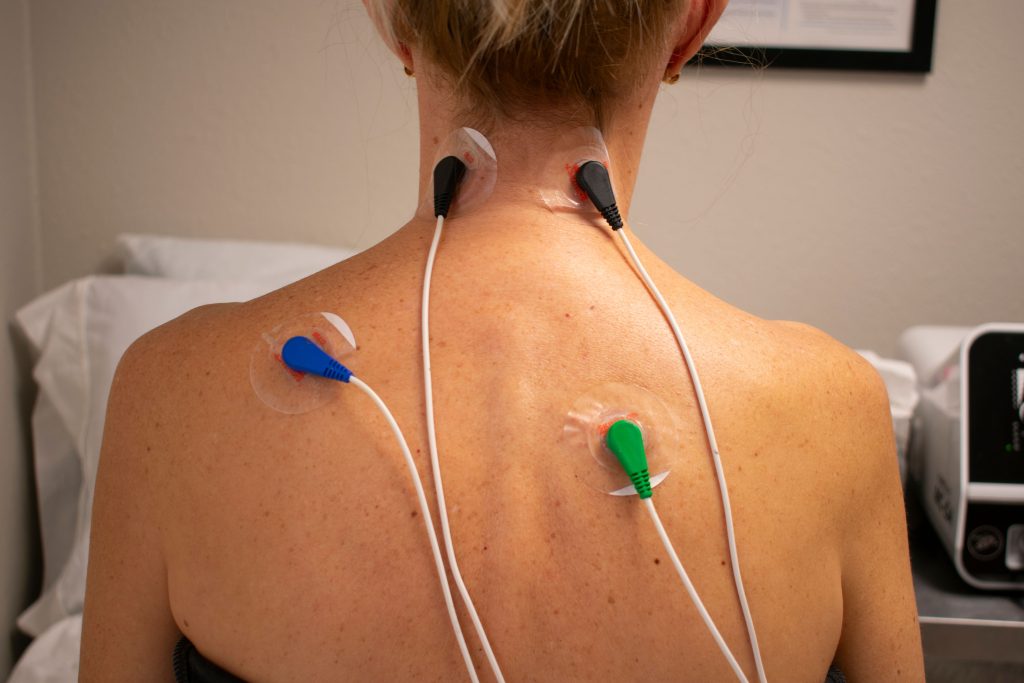
Yes. We evaluate children and adolescents with AMPS and determine whether Scrambler Therapy, MLS Laser Therapy or another approach may be appropriate. Each patient is assessed individually.
Dovie has treated children as young as five. The main requirement is that the child can communicate clearly about what they feel during treatment, since the therapy is adjusted on their feedback.
Candidacy depends on the diagnosis, symptoms, medical history, medications and prior treatments. A free phone consultation is a good first step. Call 817-714-7710.
Call 817-714-7710 or request a free phone consultation to discuss whether this treatment may be appropriate for your family member.